- Visitors
- Researchers
- Students
- Community
- Information for the tourist
- Hours and fees
- How to get?
- Visitor Regulations
- Virtual tours
- Classic route
- Mystical route
- Specialized route
- Site museum
- Know the town
- Cultural Spaces
- Cao Museum
- Huaca Cao Viejo
- Huaca Prieta
- Huaca Cortada
- Ceremonial Well
- Walls
- Play at home
- Puzzle
- Trivia
- Memorize
- Crosswords
- Alphabet soup
- Crafts
- Pac-Man Moche
- Workshops and Inventory
- Micro-workshops
- Collections inventory
- News
- Visitors
- Huacas del Sol y la Luna: Where Are They and Why Include El Brujo to Complete Your Route
News
CategoriesSelect the category you want to see:
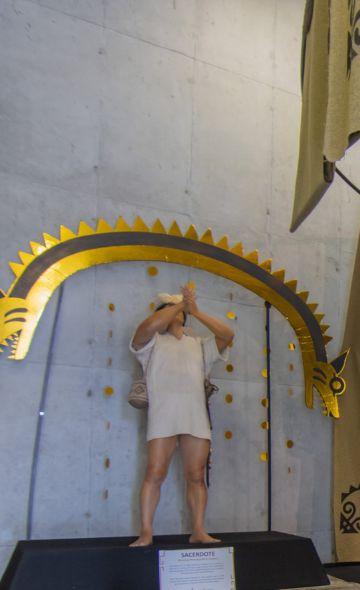
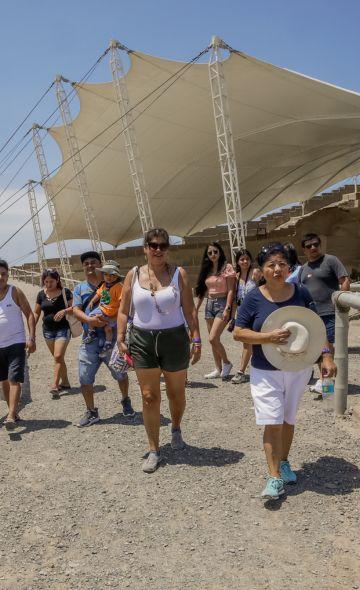
Elite Moche Burial at Huaca Cao Viejo: The Principal Priest ...
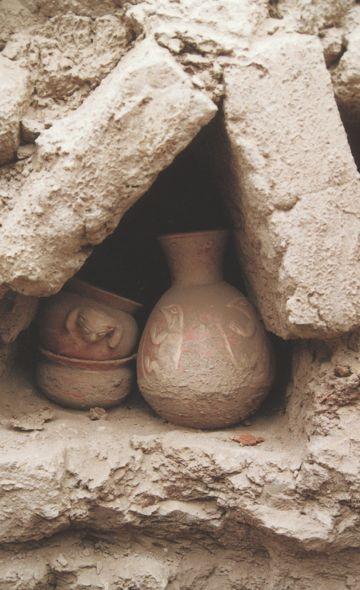
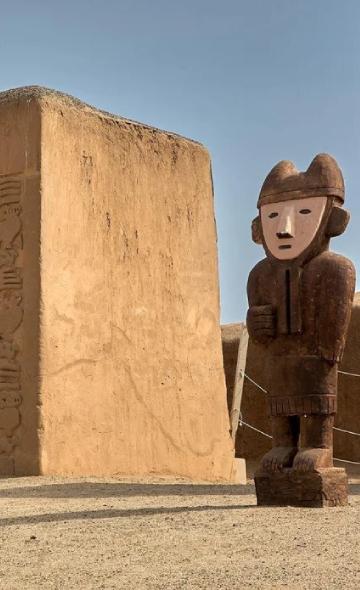
Tumbas de élite mochica en Huaca Cao Viejo: la cámara decorada Moche Elite Tombs at Huaca Cao Viejo: The Decorated Chamb ...
To receive new news.
By: Complejo arqueológico El Brujo
In the Moche Valley, just 8 kilometers from Trujillo, stand two of the most iconic temples on Peru’s northern coast: the Huacas del Sol y la Luna. These monumental structures, built by the Moche culture more than 1, 500 years ago, continue to impress with their scale, architectural complexity, and the mysteries still held within their adobe walls. Beyond their grandeur, visiting this site opens a window into Peru’s pre-Hispanic past—and offers a perfect opportunity to continue the journey to another equally fascinating destination: the El Brujo Archaeological Complex in Magdalena de Cao.
A Journey to the Origins of the Moche
The Huacas del Sol y la Luna were the main political, religious, and administrative centers of Moche society. The first, Huaca del Sol, stands out for its immense size: it is estimated that more than 143 million adobe bricks were used in its construction, each marked with stamps identifying the clans or families who contributed to its building.
The second, Huaca de la Luna, located directly across from it, served as the ceremonial center where religious rituals and human sacrifices took place—evidenced by remains found in recent excavations.
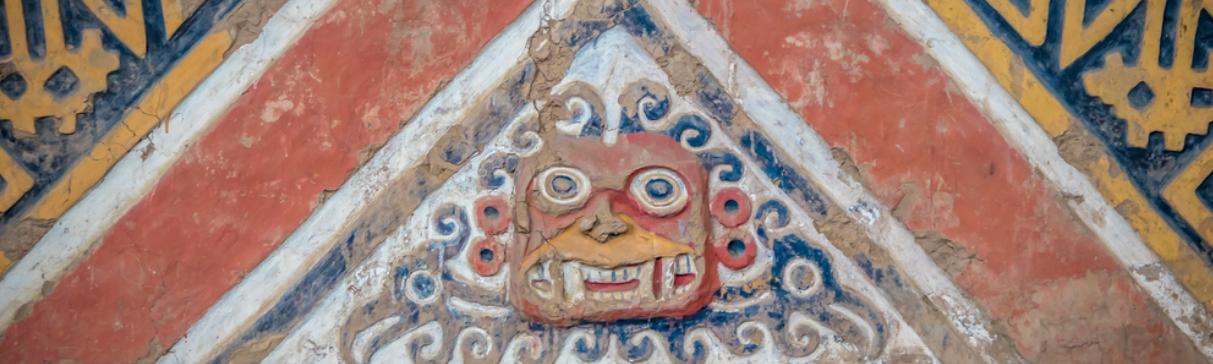
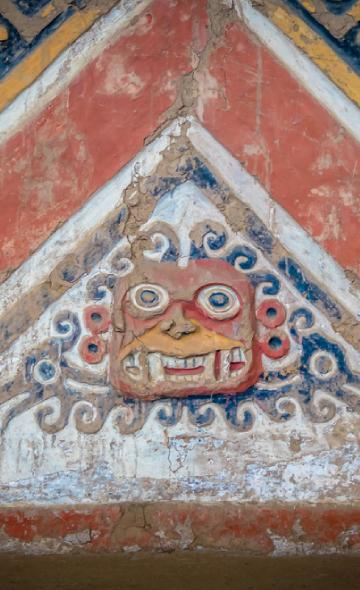
On its walls, polychrome murals depicting the god Ai Apaec—the principal Moche deity, known as the “Decapitator”—are still preserved. These images reveal the complex worldview of this culture, where life, fertility, and warfare were deeply connected to the forces of nature.
What to See at the Huacas del Sol y la Luna
A visit to the archaeological complex includes the Huacas de Moche Site Museum, a modern space displaying ceramics, ornaments, tools, and temple reconstructions. It explains how the Moche organized their territory around these sanctuaries and how farmers lived in nearby settlements close to agricultural areas.
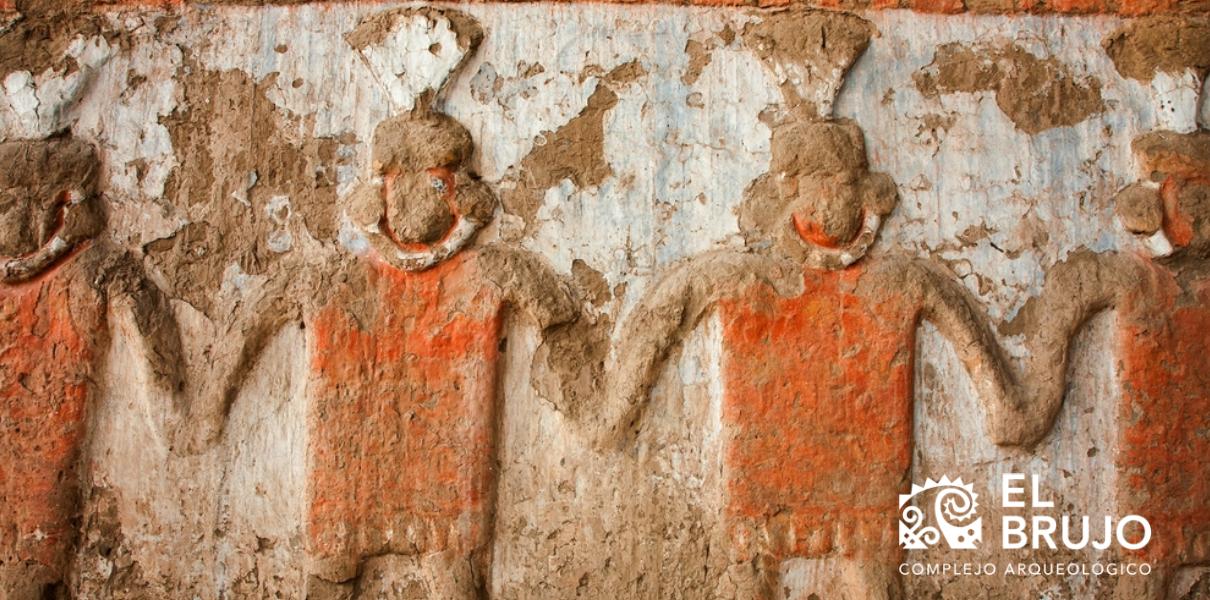
Visitors can walk through ramps, ceremonial plazas, and original murals that have withstood centuries of erosion. Unlike many other archaeological sites, conservation efforts here allow visitors to see the original colors of the reliefs—bringing the past vividly to life.
In addition, the natural setting of the Moche Valley offers an impressive view of Cerro Blanco, considered a sacred mountain by the ancient Moche. The combination of landscape and archaeological heritage makes the Huacas del Sol y la Luna an essential stop for anyone exploring Peru’s northern coast.
El Brujo: An Archaeological Gem Just One Hour from Trujillo
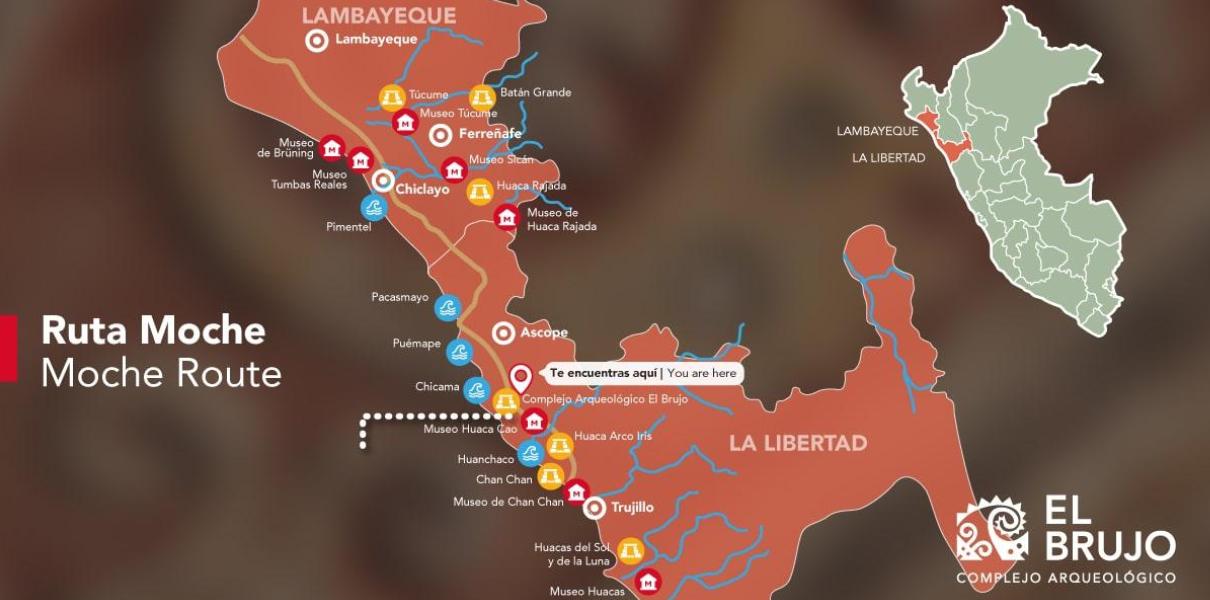
If the Huacas del Sol y la Luna reveal the political and ceremonial power of the Moche, the El Brujo Archaeological Complex—located 60 kilometers north of Trujillo—complements that story with a different perspective.
At Huaca Cao Viejo, one of the three structures that make up El Brujo, the tomb of the Lady of Cao was discovered—a mummified Moche figure buried with her ceremonial regalia. This finding transformed the traditional understanding of women’s roles in pre-Hispanic civilizations.
The complex includes the El Brujo Site Museum, where visitors can see the mummified body of the Lady of Cao, along with textiles, ceramics, and finely crafted gold and copper objects. Just a few meters away, the huacas Cortada and Prieta complete the experience with structures that reveal earlier phases of occupation, some over 4, 000 years old.
A Route That Connects History, Landscape, and Culture
Visiting the Huacas del Sol y la Luna and continuing on to El Brujo allows travelers not only to explore the legacy of the Moche culture, but also to enjoy the coastal landscapes of La Libertad, where desert, ocean, and fertile valleys create a striking environment of contrasts.
The route between both destinations also offers the chance to visit traditional towns such as Magdalena de Cao, known for its hospitality, its chicha de año, and its local cuisine. From there, visitors can explore La Bocana Beach or enjoy a seaside sunset—an experience that perfectly blends nature and culture.
A Journey into a Living Past
The Huacas del Sol y la Luna are the gateway to Moche history, but including El Brujo in your itinerary completes that perspective and reveals new dimensions of Peru’s past. Every wall, mural, and archaeological discovery in these places holds a story that remains alive, waiting to be told.
Visitors , outstanding news